Introduction
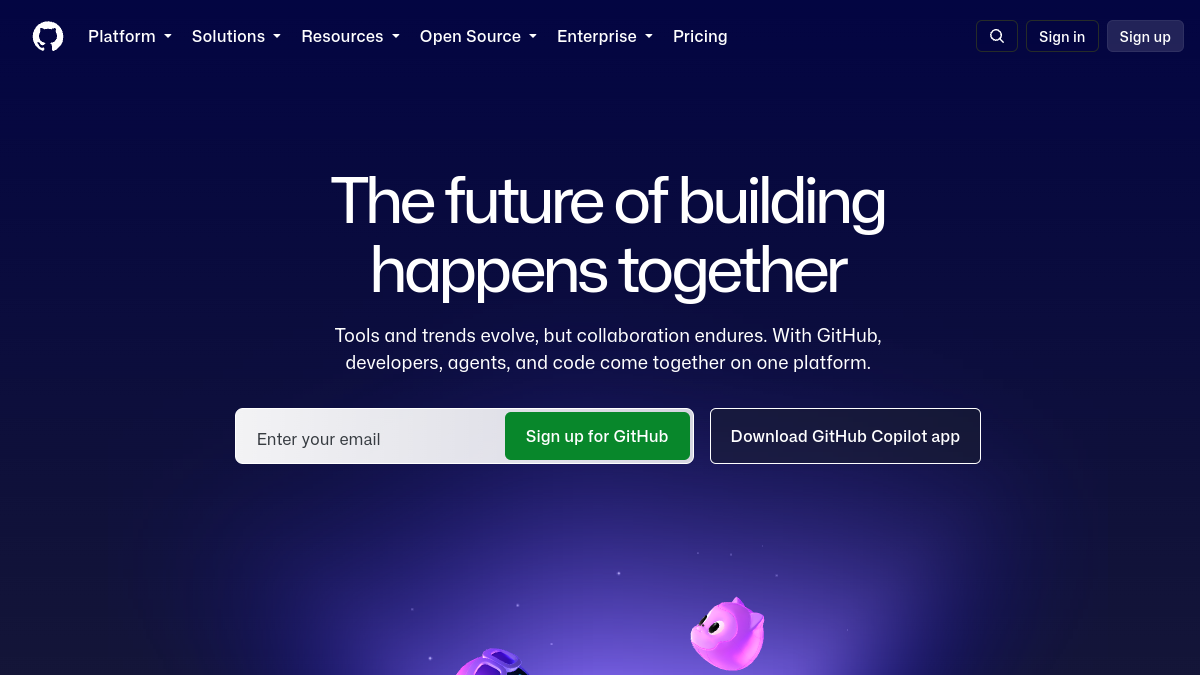
GitHub is a platform for code hosting, version control, collaboration, and open source development. It is used by millions of developers, businesses, and the largest open source community to build software. GitHub provides tools for the entire software development lifecycle, from code creation to deployment, with a focus on AI-powered development and automation.
What is GitHub?
GitHub is a web-based platform that provides hosting for software development and version control using Git. It offers distributed version control and source code management functionality, along with features such as access control, bug tracking, task management, and continuous integration. GitHub is widely adopted by developers and organizations for collaborative software development.
What makes GitHub stand out?
- AI-powered developer platform: GitHub integrates AI tools like GitHub Copilot to assist with code creation, from simple boilerplate to complex features.
- Comprehensive developer workflows: GitHub offers tools for automation (Actions), instant development environments (Codespaces), issue tracking (Issues), code review, and code quality enforcement.
- Built-in application security: GitHub Advanced Security provides features to find and fix vulnerabilities, secure code as you build, and protect secrets.
- Large open source community: GitHub hosts the largest open source community, with programs like GitHub Sponsors to fund open source developers.
- Scalability: GitHub scales with teams of any size, from startups to enterprises, across various industries.
Who is it for?
- Developers: Individuals writing, testing, and fixing code.
- Teams: Small and medium teams, enterprises, startups, and nonprofits.
- Industries: Healthcare, financial services, manufacturing, government, and more.
- Open source maintainers: Those managing open source projects and communities.
What can you do with GitHub?
- Code: Write, test, and fix code quickly with AI assistance.
- Plan: Organize roadmaps and tasks with GitHub Projects and Issues.
- Collaborate: Share ideas, ask questions, and review code changes together.
- Automate: Ship faster with secure, reliable CI/CD using GitHub Actions.
- Secure: Find and fix vulnerabilities, and protect secrets with GitHub Advanced Security.
- Develop anywhere: Launch cloud-based development environments with GitHub Codespaces and manage projects on mobile with GitHub Mobile.
How does GitHub work?
GitHub hosts Git repositories in the cloud, allowing developers to collaborate on code from anywhere. Users can create repositories, track issues, propose changes via pull requests, and review code. GitHub provides AI and automation tools to streamline the development process, from the first line of code to final deployment. It also offers a marketplace for extending toolchains with apps, actions, and AI models.
Pricing
GitHub offers both free and paid plans. Pricing details are available on the GitHub website.
Alternatives
Alternatives to GitHub include other code hosting and version control platforms such as GitLab and Bitbucket.
FAQ
What is GitHub?
GitHub is a platform for code hosting, version control, collaboration, and open source development.
Is GitHub free?
GitHub offers free and paid plans. The free plan includes many features for individuals and organizations.
What is GitHub Copilot?
GitHub Copilot is an AI-powered code completion tool that helps write better code with AI.
Can I use GitHub for private repositories?
Yes, GitHub supports private repositories on both free and paid plans.
Does GitHub offer CI/CD?
Yes, GitHub Actions provides CI/CD automation for building, testing, and deploying code.